A finance manager at a mid sized Karachi trading firm got a call last month. The voice on the line belonged to her CEO. Same tone, same slight accent, same way he always rushed his sentences when a deal was closing. He needed an urgent wire transfer approved before a supplier deadline. She approved it. The CEO never made that call. It was an AI generated voice clone, built from a few minutes of audio pulled from a conference panel he had spoken at months earlier.
This is not a rare story anymore. AI powered phishing has moved from theory to daily practice, and Pakistani businesses are squarely in the blast radius. Attackers no longer need to write convincing English or fake a familiar voice by hand. AI tools do it for them, in seconds, at almost no cost.
This guide breaks down what AI powered phishing actually looks like, why Pakistani organizations are increasingly being targeted, and what your business needs to do differently in 2026 to stay ahead of it.
What Is AI Powered Phishing
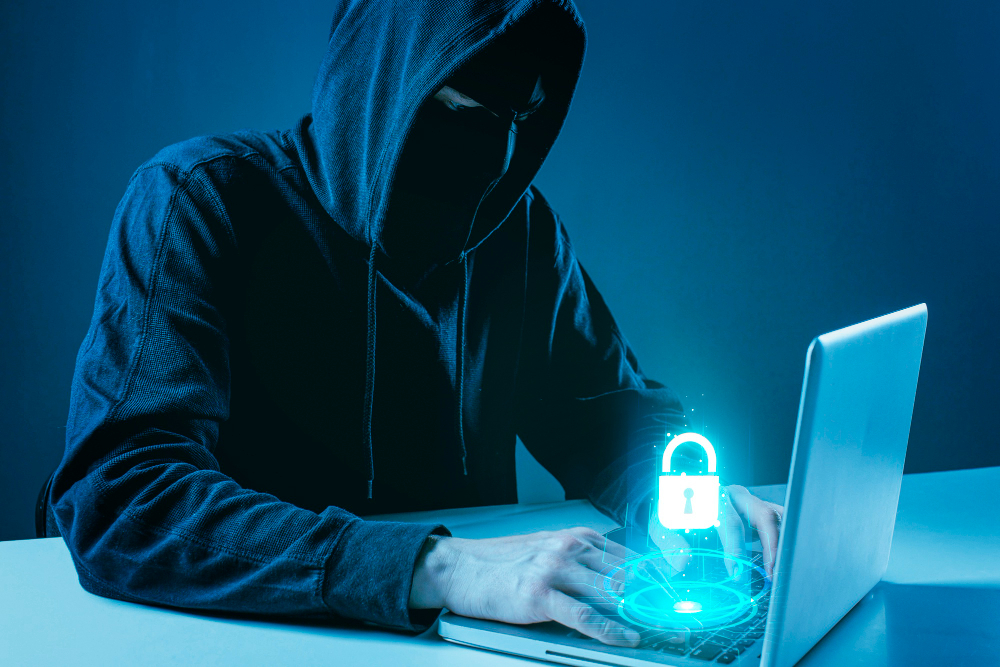
Traditional phishing relied on volume. Send a thousand poorly written emails and hope a handful of people click. AI powered phishing flips that model. Attackers use large language models to generate flawless, personalized messages, voice cloning tools to mimic real executives, and automation to research targets at a scale no human team could match.
The result is fewer attempts, but each one is sharper. A phishing email no longer has broken grammar or a generic greeting. It references your actual vendor, your actual project name, and arrives at the exact moment your finance team is expecting an invoice.
Why Pakistan Is Becoming a Target for AI Driven Phishing Campaigns
Pakistan’s digital economy has grown faster than its security awareness in many organizations. More businesses are running payments, payroll, and vendor communication through email and messaging apps, which gives attackers more entry points to exploit.
Add to that a workforce that is highly active on LinkedIn and WhatsApp, where personal and professional details are easy to gather, and you have ideal conditions for AI driven social engineering. Karachi and Lahore based exporters, banks, and ecommerce companies are already seeing an uptick in these attacks.
How AI Changes the Phishing Playbook
The core tactic, tricking someone into acting quickly without checking, has not changed. What has changed is how convincing the bait has become.
| Element | Traditional Phishing | AI Powered Phishing |
| Writing quality | Often has spelling or grammar errors | Fluent, natural, and error free |
| Personalization | Generic greeting, mass sent | Uses real names, roles, and project details |
| Voice or video | Not typically used | Cloned voice or deepfake video calls |
| Timing | Random | Timed to match real business events like invoices or payroll |
| Cost to attacker | Low but labor intensive | Extremely low and largely automated |
Deepfake Voice Scams: The New CEO Fraud
CEO fraud is not new. What is new is that attackers no longer need to impersonate an executive by text alone. With a short clip of someone speaking, pulled from a YouTube interview, a webinar recording, or even a LinkedIn video, AI tools can generate a convincing voice clone.
These calls are usually short, urgent, and designed to bypass normal approval steps. A request to skip the usual two person sign off because the CEO is traveling and needs it done now is one of the most common patterns being reported.
AI Generated Emails That Beat Spam Filters
Spam filters are largely trained to catch patterns common in older phishing emails, like odd formatting, mismatched sender names, or clumsy phrasing. AI generated emails avoid nearly all of these markers.
They read like something a real colleague or vendor would write, which means the responsibility increasingly falls on the person reading the email rather than the filter catching it first.
Real World Examples of AI Phishing Attacks
A Hong Kong finance employee transferred over 25 million dollars in 2024 after joining a video call where every other participant, including the CFO, was an AI deepfake. In the United States, several companies have reported voice cloned calls impersonating executives to request urgent wire transfers.
Pakistan has not been spared. Local IT security teams have reported a rise in WhatsApp based scams using cloned voices of business owners, and finance departments at exporters have flagged emails that closely mimic real supplier communication down to invoice formatting.
Why Traditional Employee Training No Longer Works
Most security awareness training still teaches people to look for spelling mistakes, strange links, or generic greetings. AI powered phishing removes all three of those tells.
Training built around outdated red flags gives employees false confidence. They pass the old checklist and still fall for the new attack, because the checklist was built for a threat that no longer looks the way it used to.
Warning Signs Your Business May Already Be a Target
- Unusual urgency in payment or approval requests, especially outside normal hours
- Requests to bypass standard approval steps or two person sign off
- Slight inconsistencies in a familiar voice, like unnatural pauses or flat emotion
- Emails referencing accurate internal details that were never made public
- A sudden request to change bank account details for a known vendor
- Login attempts or password reset requests you did not initiate
Industries in Pakistan Most at Risk
Some sectors are more exposed than others because of how they handle money, data, or international communication.
| Industry | Why It Is a Target |
| Banks and financial institutions | High value transactions and regulatory pressure make urgent requests believable |
| Textile and garment exporters | Heavy reliance on international email communication with buyers and suppliers |
| Ecommerce businesses | Large customer databases and frequent payment processing |
| Manufacturing and industrial firms | Vendor payments and OT systems with limited security monitoring |
| SMEs across sectors | Fewer dedicated security resources and informal approval processes |
The Real Cost of a Successful Phishing Attack in Pakistan
The financial hit from a single successful phishing attack can range from a few lakh rupees for a small business to tens of millions for a mid sized enterprise, depending on the transaction involved. Beyond the direct loss, businesses face damaged vendor trust, regulatory scrutiny, and weeks of recovery work.
Ambsan Technologies has worked with businesses across Pakistan on incident response after phishing related fraud, and the pattern is consistent. The cost of prevention is always a fraction of the cost of recovery.
How AI Powered Phishing Bypasses Multi Factor Authentication
Multi factor authentication is still one of the strongest defenses available, but attackers have adapted. AI powered phishing kits can now generate real time fake login pages that capture both your password and your one time code, then relay them to the real service before the code expires.
This is known as an adversary in the middle attack, and it means MFA alone is no longer enough. It has to be paired with phishing resistant methods like hardware security keys or app based approval prompts that show request details.
Spotting the Difference: AI Phishing vs Traditional Phishing
| What You See | Likely Traditional Phishing | Likely AI Powered Phishing |
| Email tone | Awkward phrasing or urgency with poor grammar | Natural, professional, matches the sender’s real style |
| Sender details | Mismatched or unfamiliar email domain | Domain looks nearly identical or spoofed convincingly |
| Attachments or links | Obvious fake login pages | Pixel accurate clones of real login pages |
| Phone or voice contact | Rare | Cloned voice calls requesting urgent action |
| Best defense | Basic spam filtering and staff awareness | Layered detection, verification protocols, and monitoring like the frameworks Ambsan builds for clients |
Building an AI Aware Security Culture in Your Organization
Technology alone will not solve this. The strongest defense is a workplace culture where verifying an unusual request is normal, not awkward.
- Set a rule that any payment or credential request, even from a known voice, gets confirmed through a second channel
- Encourage staff to call back on a known number rather than replying to the same thread or call
- Run updated awareness sessions that cover voice cloning and deepfake tactics, not just email red flags
- Make it easy and blame free for employees to flag a suspicious request
Technical Defenses That Actually Work Against AI Phishing
A layered approach works far better than any single tool. Email authentication protocols like DMARC, SPF, and DKIM stop a large share of spoofed domains before they reach an inbox. Phishing resistant MFA closes the gap that AI generated fake login pages exploit.
Continuous monitoring through a SOC adds the human review layer that automated filters miss, catching unusual login patterns or payment requests before they turn into a loss. If your business has not reviewed its email security and monitoring setup in the last year, now is a good time to talk to a security team about a free risk assessment.
Questions to Ask Your Cybersecurity Provider About AI Phishing Defense
- Do you monitor for AI generated phishing patterns, not just known malware signatures
- What phishing resistant authentication methods do you support
- How quickly can you detect and respond to a suspicious wire transfer request
- Do you run updated awareness training that covers voice cloning and deepfakes
- What does your incident response process look like if a deepfake call already led to a transfer
How Pakistani Businesses Are Responding
Forward looking businesses in Pakistan are starting to treat AI powered phishing the same way they treat any other operational risk, with clear protocols, tested response plans, and regular reviews rather than a one time training session.
Organizations working with an experienced security partner tend to catch these attempts earlier, simply because someone is actively watching for unusual patterns instead of relying on employees to catch every attempt alone.
How Ambsan Technologies Defends Pakistani Businesses Against AI Phishing
Ambsan Technologies works with businesses across Karachi, Lahore, and Islamabad, along with clients in the United States through our Huntington Beach, California office, to build defenses that match how attackers actually operate today, not five years ago.
Our approach combines 24/7 SOC monitoring, phishing resistant authentication rollouts, email security hardening, and incident response planning, all aligned with ISO 27001 practices and, where relevant, PECA and State Bank of Pakistan requirements. We work with organizations ranging from local SMEs to large enterprises, and we tailor the defense to the size and risk profile of the business rather than offering a one size fits all package.
Ready to see where your business stands? Book a Free Security Assessment with our team and get a clear picture of your exposure to AI powered phishing.
Frequently Asked Questions
What is AI powered phishing?
AI powered phishing uses artificial intelligence, including language models and voice cloning tools, to create highly convincing fake emails, messages, or calls that impersonate real people or organizations.
How is AI phishing different from regular phishing?
Regular phishing often has spelling errors and generic messaging sent in bulk. AI phishing is personalized, grammatically flawless, and can include cloned voices or video, making it far harder to spot.
Can AI phishing bypass multi factor authentication?
Yes. Attackers can use real time relay techniques to capture both your password and one time code through convincing fake login pages, then use them before the code expires.
Which businesses in Pakistan are most at risk from AI phishing?
Banks, exporters, ecommerce companies, and manufacturers handling frequent payments or international communication face higher risk, though SMEs across all sectors are increasingly targeted.
What is a deepfake voice scam?
A deepfake voice scam uses AI generated audio, built from real recordings of a person’s voice, to impersonate them on a phone call, usually to request an urgent payment or sensitive information.
How can employees spot an AI generated phishing email?
Since AI emails are often error free, the focus should shift from spotting mistakes to verifying unusual requests through a second channel, regardless of how convincing the message sounds.
Does antivirus software stop AI powered phishing?
Antivirus software helps with malicious attachments but does little against social engineering tactics like cloned voices or convincing emails that contain no malware at all.
What should a business do if it suspects a phishing attack already succeeded?
Contact your security team or provider immediately, freeze any pending transactions if possible, change affected credentials, and begin an incident response process to contain the damage.
Is AI phishing covered under Pakistan’s cybersecurity regulations?
PECA addresses electronic fraud and unauthorized access broadly, and businesses in regulated sectors like banking fall under additional State Bank of Pakistan cybersecurity requirements that apply regardless of the attack method used.
How often should a business update its phishing awareness training?
At least twice a year, with updates that reflect current tactics like voice cloning and deepfake video, since training built on outdated red flags leaves employees unprepared for newer attacks.
Final Thoughts
AI powered phishing is not a future risk. It is already targeting Pakistani businesses through cloned voices, flawless emails, and attacks timed to exploit real business moments. The old advice to watch for typos and strange links no longer covers the threat.
What works is a layered defense: verification habits built into daily operations, phishing resistant authentication, continuous monitoring, and a team that knows what to do the moment something feels off.
For more on protecting your business, see our guides on Email Security in Pakistan, SOC Monitoring Costs, and How to Choose the Right Cybersecurity Company for Your Business.
Talk to Our Security Team today and find out where your business stands against AI powered phishing. Schedule a Consultation