
Recent changes in the digital world include the increased use of artificial intelligence to boost productivity and advancement across businesses. Unfortunately, cybercriminals now use the same technology to carry out more advanced and adaptive forms of attacks.
AI-powered cyberattacks are no longer a futuristic threat; they are already here, evolving quickly, and becoming more challenging to detect and stop.
They utilise machine learning, language analysis, and prediction technology to adapt, gain knowledge, and overcome regular defences. AI is transforming cybersecurity through activities like phishing and automated attacks on vulnerabilities.
How AI-Powered Cyber Attacks Work
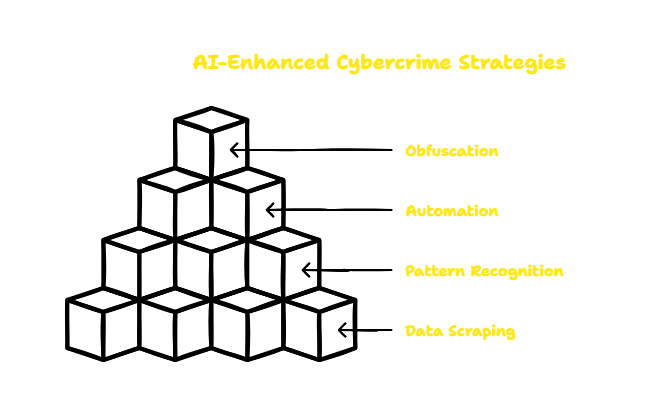
To understand how to defend against them, it is essential to grasp how AI-powered cyberattacks function. These cyber attacks often proceed through several stages.
- Data Scraping – With artificial intelligence, cybercriminals gather a lot of information from the web and breach databases.
- Recognising Patterns – Means that by learning from data, machine learning algorithms come up with the most effective ways to attack.
- Automation and Real-Time Change – Unlike scripts, AI can manage attacks and alter its approach on its own as soon as the target adapts.
- Obfuscation – AI makes it harder for security systems to catch malware by changing its behaviour and appearance.
Real-World Examples of AI-Powered Cyberattacks
Many major cyberattacks have already involved AI-based technologies. Including:
- Fraudsters sometimes use AI technology to create deepfake voices of company executives, misleading employees into making fund transfers.
- AI is used to produce phishing emails that appear human-like and exploit individuals’ emotional vulnerabilities.
Each of these cases illustrates how AI-powered cyberattacks are not only real but rapidly advancing.
Why Classic Cybersecurity Protections Are Not Sufficient
Commonly, firewalls, signature-based antivirus programs and people checking logs are used by organisations. Unfortunately, these defences fail when threats are flexible and more innovative. Learning and evolving attackers make it difficult for rules and databases to maintain security.

If an antivirus uses predefined malware signatures, it could fail to detect a new variant powered by an AI. Similar to the other case, manually reviewing logs and reports might overlook specific suspicious methods if the attacker imitates standard patterns with AI.
This mismatch between defence and offence makes it essential to adopt more innovative cybersecurity measures that can counter AI-powered cyberattacks.
Building an AI-Driven Defence Strategy
Detecting Threats with AI
Machine learning analyses user behaviour online, network statistics, and patterns in access to identify anything that appears out of the ordinary. These models can spot anomalies even though the problem does not exactly match a known threat.
Behavioral Analytics
These technologies enable systems to distinguish between regular behaviour and anything that appears suspicious. For example, if a worker who usually logs in between 9 am and 5 pm signs in at midnight from another country, the system can detect this and raise an alert.
ACE Response Systems
Besides detecting issues, AI can respond automatically. If a breach is detected, the system will isolate the affected section of the network, remove access for users, and initiate a security process.
These proactive measures help defend against AI-powered cyberattacks before they can cause significant damage.
Employee Education and Awareness
Having technology is not enough on its own. Many AI-powered cyberattacks exploit human vulnerabilities through social engineering, phishing, or manipulation. Staff must be taught to notice these threats.
Conducting workshops, simulations, and sharing updates about new attacker techniques helps an organisation respond more effectively. An advanced security setup may fail if a worker inadvertently grants access to a malicious actor.
Data Privacy and Responsible Artificial Intelligence
As AI plays a larger role in cybersecurity, ethical issues should not be overlooked. Attackers and defenders are both using people’s data as input to train their models and secure or attack systems. Firms must ensure that their AI operations align with relevant privacy laws and ethical principles.
It’s also essential to ensure AI transparency, which allows users to see how algorithms make decisions, as this can reveal issues not foreseen and decrease the possibility of employees misusing AI.
How to Prepare for the Emerging Threats in Cyber Warfare
As AI-powered cyberattacks become more advanced, the nature of cyber warfare is shifting. It is expected that the future will include:
- AI programs that can control and conduct attacks all by themselves.
- Defensive and offensive AI can engage in real-time cybersecurity battles with each other.
- Attackers might use false data in training to trick AI used for defence.
To address these new risks, we must take proactive steps to stay ahead of them. This requires funding to research AI security, developing systems that can respond to threats, and foster collaboration between governments, businesses, and cybersecurity professionals.
Preparing for the Future of Cyber Warfare
Governments are starting to recognise the risks posed by AI-powered cyberattacks. Laws and regulations are being implemented to require businesses to safeguard their data and disclose any security breaches. Even so, because the law is slow to catch up with technology, there are gaps that attackers can use.
Expected updates in cybersecurity rules are necessary to respond to the newest threats from AI. It covers working with other countries, penalising online crimes harshly and sponsoring the development of security systems by AI organisations.
Final Thoughts
AI-powered cyberattacks represent a new frontier in digital threats. They work more effectively than old approaches, are faster and more dangerous. Failing to appreciate evolving digital threats could result in an attack that steals or discloses an organisation’s data, money or its good name.
The main way to defend your business is to use AI security systems, inform your employees, learn about emerging threats and follow the rules and laws.
Since attackers always find new ways to attack, defenders must also find new ways to protect. Waiting for attacks to happen is no longer enough; a thoughtful and active approach is crucial to securing networks in today’s era of AI.
Ready to Defend Against AI-Powered Cyber Threats?
Don’t wait for an attack to expose vulnerabilities in your systems. At Ambsan Technologies, we specialize in AI-driven cybersecurity solutions designed to stay ahead of evolving threats.
✅ Schedule a free cybersecurity consultation
✅ Learn how our AI-powered threat detection and response systems can protect your business
✅ Empower your team with the latest in cyber awareness training
Contact us or visit ambsan.com to learn more about securing your digital future.